


Can a Self-Checkout Mistake Lead to Shoplifting Charges in New Jersey?
June 30, 2026
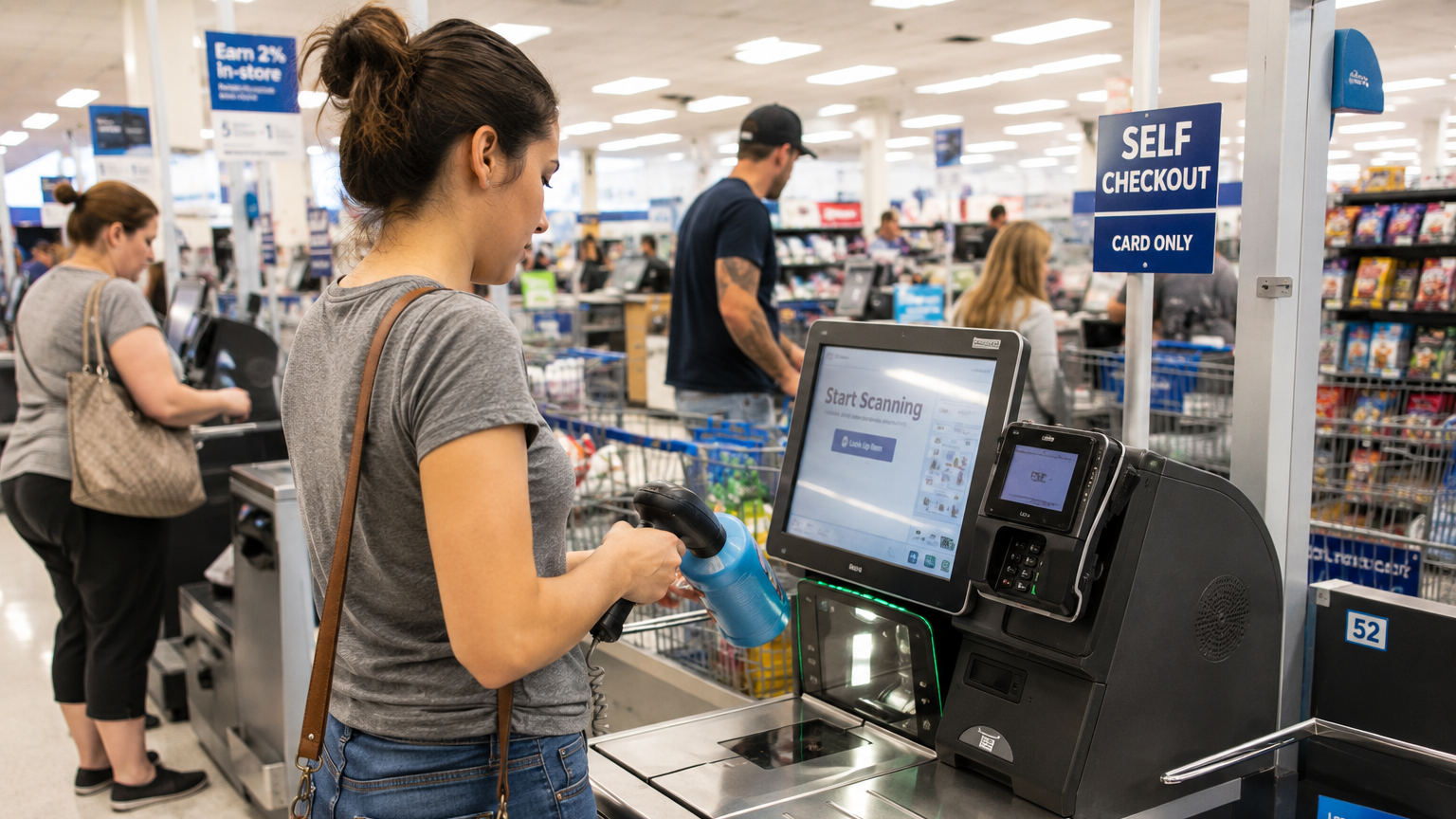
Yes. A missed or incorrectly scanned item can lead to a shoplifting accusation or charge in New Jersey. Even so, a self-checkout record showing that an item was not properly scanned or that the register reflected less than its full retail value does not, by itself, establish why it happened.
You may have finished scanning your groceries or household items, paid, and started walking toward the exit when a loss-prevention employee stopped you. Perhaps an item remained beneath the cart, the scanner did not register a barcode, or you scanned several similar items without realizing one was missed.
Now, the store may be treating what you believed was a mistake as deliberate shoplifting. Surveillance footage, scanner data, store reports, your statements, and what happened throughout the checkout process can all become important when the accusation is evaluated.
Does a Missed Scan Automatically Prove Shoplifting?
No. An unpaid or incorrectly scanned item can raise suspicion, but it does not automatically explain what you intended to do.
New Jersey law defines under-ringing as causing a register or other sale recording device to reflect less than the full retail value of the merchandise. To obtain a conviction based on under-ringing, the State must prove beyond a reasonable doubt that the person purposely under-rang the merchandise with the purpose of depriving the merchant of its full retail value.
Purpose generally refers to a person’s conscious objective. Because intent is rarely established through direct evidence of what someone was thinking, it is often evaluated through actions and surrounding circumstances.
That distinction is especially important at self-checkout. You may be scanning merchandise, responding to machine prompts, moving bags, handling payment, and keeping track of children at the same time.
A missed item can still lead to a charge. However, the entire transaction can matter when evaluating whether the item was deliberately skipped or accidentally overlooked.
What Can Store Surveillance Footage Show?
Retailers may use cameras around checkout stations, aisles, exits, scanners, and bagging areas. The footage can show more than whether an item appeared on the final receipt.
Store video may show:
- Where the item was located: It may have been inside the cart, beneath it, beside the scanner, or mixed with other merchandise.
- What happened at the scanner: Video may show whether you passed the item over the scanner, tried to enter it manually, or responded to a machine prompt.
- Whether an employee became involved: An employee may have assisted you, cleared an alert, moved an item, or interrupted the checkout.
- What happened around the missed scan: The recording may show repeated scanning attempts, confusion involving similar items, or your conduct before and after the transaction.
A short clip may not provide the same context as the full recording. The absence of concealment does not automatically end the accusation, but reviewing the recording itself can reveal details that may not appear in a loss-prevention employee’s summary.
What Can Scanner and Transaction Records Show?
A self-checkout terminal generally creates an electronic record of the transaction. Depending on the retailer’s system, it may identify scanned products, quantities, price lookups, voided entries, timestamps, machine alerts, and payment information.
These records can help establish what the system registered. They do not always establish why an item was missing from the transaction.
For example, the data may show that only one of two similar products was scanned. That record does not necessarily reveal whether you purposely skipped the second item, believed both had registered, or became distracted during checkout.
Your receipt is therefore important. Preserve the original or take clear photographs of it. A bank or credit card record can also help confirm the payment and the approximate time of the transaction.
What Did Loss Prevention Observe?
A loss-prevention employee may watch the transaction live, review footage, or rely on an alert generated by the store’s system. The employee may then prepare a report describing the merchandise, its alleged value, what happened at the scanner, what you said, and whether police were contacted.
Relevant questions include:
- Did the employee observe the entire transaction?
- Could the employee clearly see the scanner and cart?
- Did the machine issue an alert or did another employee assist?
- Does the report match the video, receipt, and transaction data?
A firm accusation does not necessarily mean that every part of the transaction was observed or interpreted correctly.
At Aydelotte Law, LLC, we understand how quickly an ordinary shopping trip can turn into a stressful criminal matter. Reviewing the full transaction can help place one alert, statement, or moment in its proper context.
Can the Store Review Earlier Transactions?
In some situations, a retailer may review footage or purchase records from earlier visits after identifying an alleged missed scan.
Whether those records are relevant depends on what they show and how they were identified. A previous visit involving another allegedly missed or incorrectly scanned item does not automatically establish purposeful conduct in the current incident. Stores and investigators may still examine earlier purchases to determine whether they believe there is a pattern.
Do not delete or throw out receipts, payment records, store-app information, or other relevant data. Do not assume that returning to the store and offering an explanation will prevent further action.
What Should You Do When Store Security Stops You?
A stop by loss prevention and an arrest by police are different events. Store security may ask you to move to another area, provide identification, sign paperwork, turn over the merchandise involved, or remain while police are contacted. Police involvement may result in questioning, a complaint, a summons, or an arrest, depending on the circumstances.
Avoid arguing, threatening anyone, or physically escalating the encounter. At the same time, you do not need to guess about what happened or agree that you intended to steal.
You may feel embarrassed or apologize because you are trying to calm the situation. You may say that you “must have missed it” before you fully understand the accusation. A loss-prevention employee or police officer could later describe that statement as an admission.
Trying to explain every detail immediately can also lead you to adopt someone else’s wording or make statements that do not match the video or transaction records. If police contact you after you leave the store, speaking with a South Jersey criminal defense attorney before answering questions can help you understand your legal position and avoid making additional statements that become difficult to explain later.
Why Does the Value of the Merchandise Matter?
The full retail value of the merchandise affects how a New Jersey shoplifting offense is graded.
Shoplifting involving merchandise valued at less than $200 is a disorderly persons offense. An alleged value of at least $200 but not more than $500 can result in a fourth-degree charge. Shoplifting involving more than $500 but less than $75,000 is generally a third-degree crime, while an alleged value of $75,000 or more is generally a second-degree crime.
The value can affect where the case is handled and the potential consequences. Still, value does not replace the State’s obligation to prove the required conduct and intent beyond a reasonable doubt.
What Should You Save After Being Stopped at Self-Checkout?
Write down what happened while the details remain fresh. Include the time, checkout location, merchandise involved, machine prompts, employee interactions, and statements made during the stop.
Also save:
- Purchase records: Your receipt and proof of payment
- Store documents: Any incident paperwork or trespass notice
- Court documents: The complaint, summons, or court notice
- Witness information: Names and contact information for anyone who observed the transaction or stop
- Relevant digital records: Store-app records or messages connected to the shopping trip
Do not alter or delete records. Avoid posting about the accusation online or repeatedly contacting store employees to explain what happened.
Speak With a South Jersey Shoplifting Defense Lawyer
Being accused of shoplifting after using a self-checkout can feel especially frustrating when you believe an ordinary mistake has been treated as a crime. The store’s records may be important, but they should be reviewed alongside the full transaction and the circumstances surrounding the alleged missed scan.
At Aydelotte Law, LLC, we represent people facing shoplifting accusations in Camden County, Burlington County, Gloucester County, and throughout South Jersey. We can review the complaint, available video, transaction data, loss-prevention report, statements, and other evidence to help you understand the charge, how the evidence relates to your case, and the legal options available to you.
Contact Aydelotte Law, LLC to discuss a self-checkout shoplifting accusation and what to expect next. Use our contact form to request a confidential consultation.
Disclaimer: The articles on this blog are for informational purposes only, do not constitute legal advice, and do not create an attorney-client relationship. If you are seeking legal advice, please contact our law firm directly.